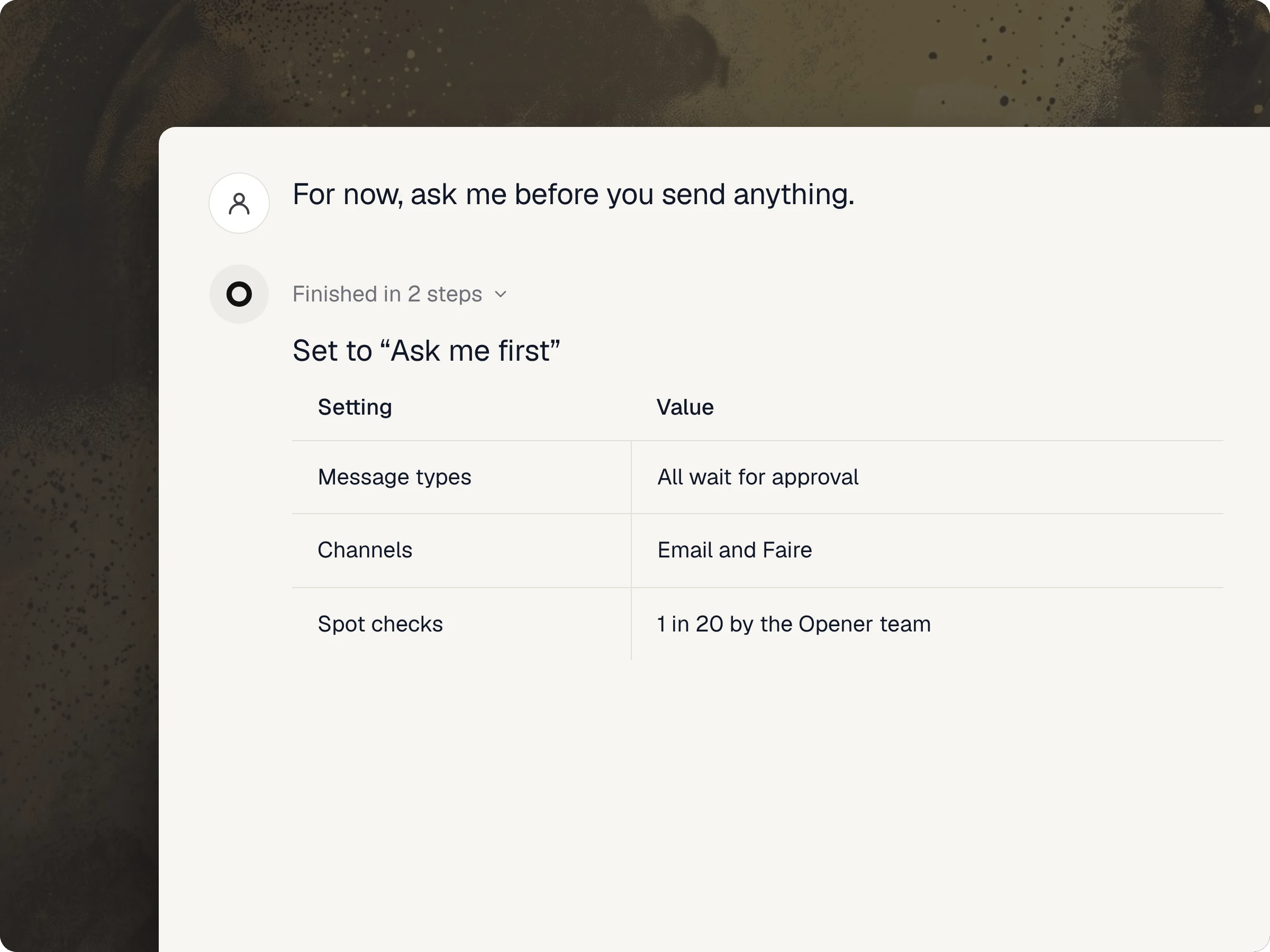
Control and autonomy
You decide how much your agent does on its own
Start small, then let routine work run itself. Choose what sends on its own, what waits for you, and what the agent never does.
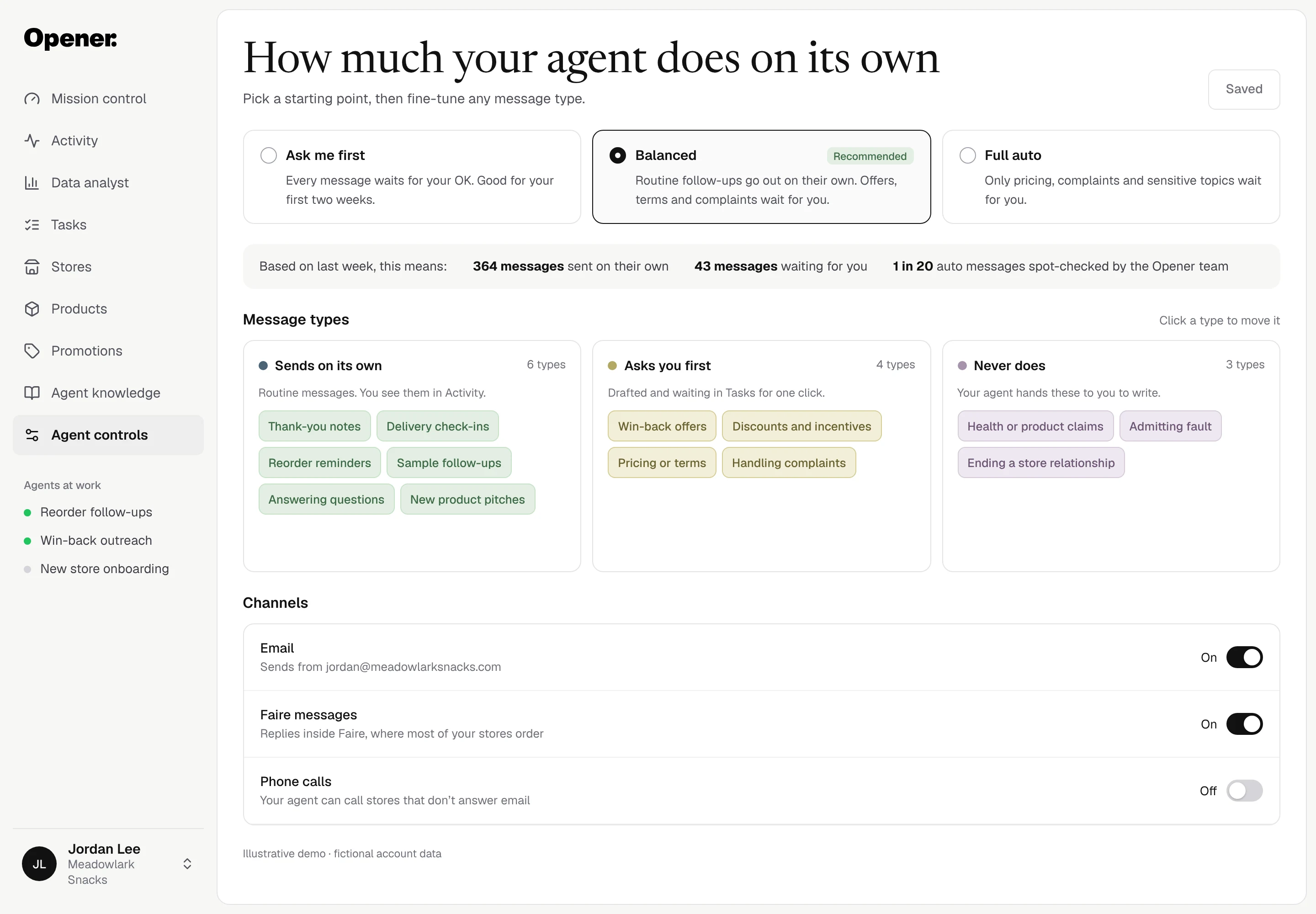
You decide how much your agent does on its own. Start small, then let routine work run itself. Choose what sends on its own, what waits for you, and what the agent never does.
Pick how much it does
Three starting points: ask me first, balanced or full auto.
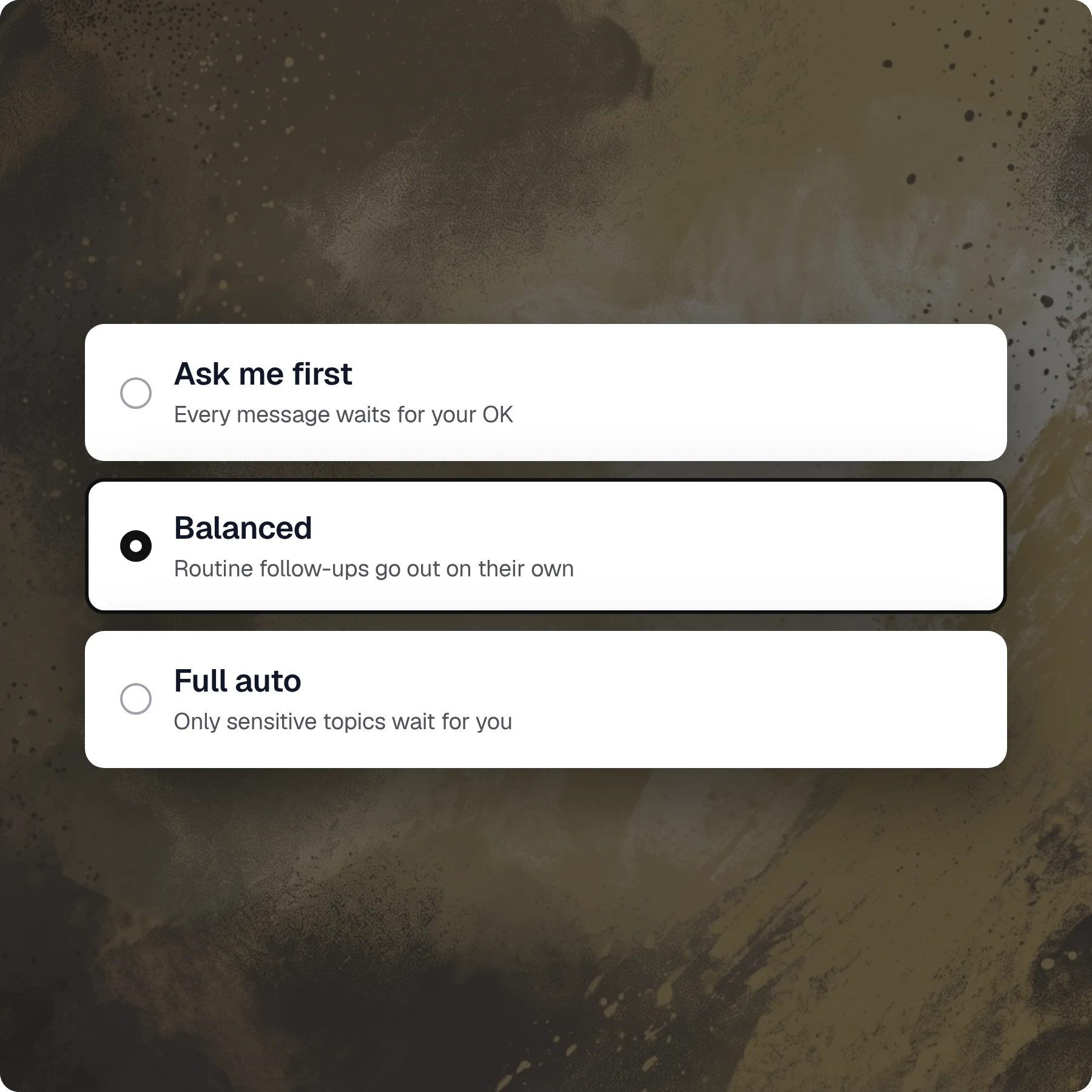
Ask me first
Keep review close while you get familiar with the agent’s work.
Balanced
Let routine work progress while keeping important decisions with a person.
Full auto
Give the agent more room to act within the boundaries you set.
You decide the lines
Move any message type between “sends on its own”, “asks you first” and “never does”.
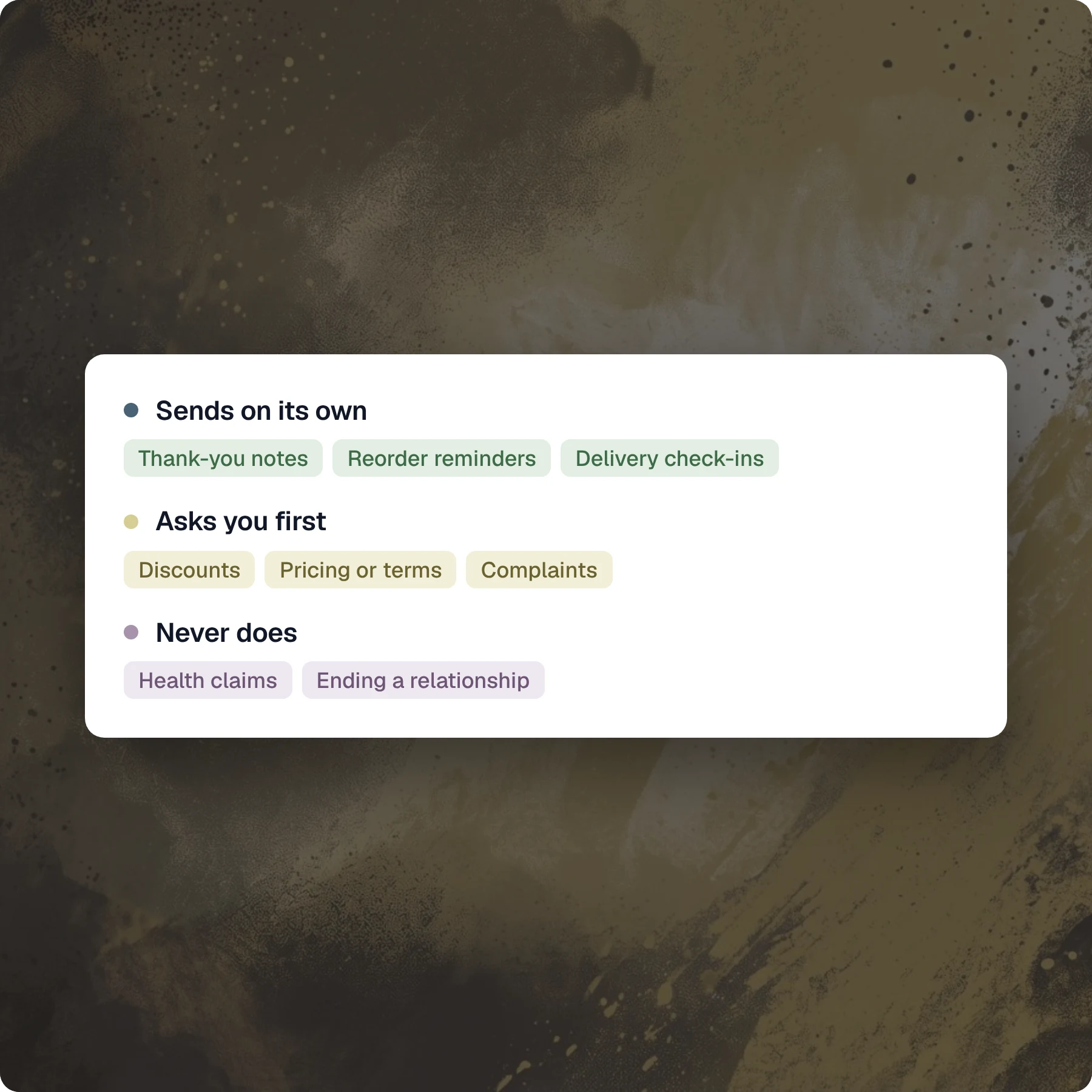
Sends on its own
Choose the message types the agent may send without a separate approval.
Asks you first
Keep selected messages waiting for your review before they go out.
Never does
Make the actions that are off limits explicit.
Switch channels on and off
Email, Faire messages and phone calls, each with its own switch.
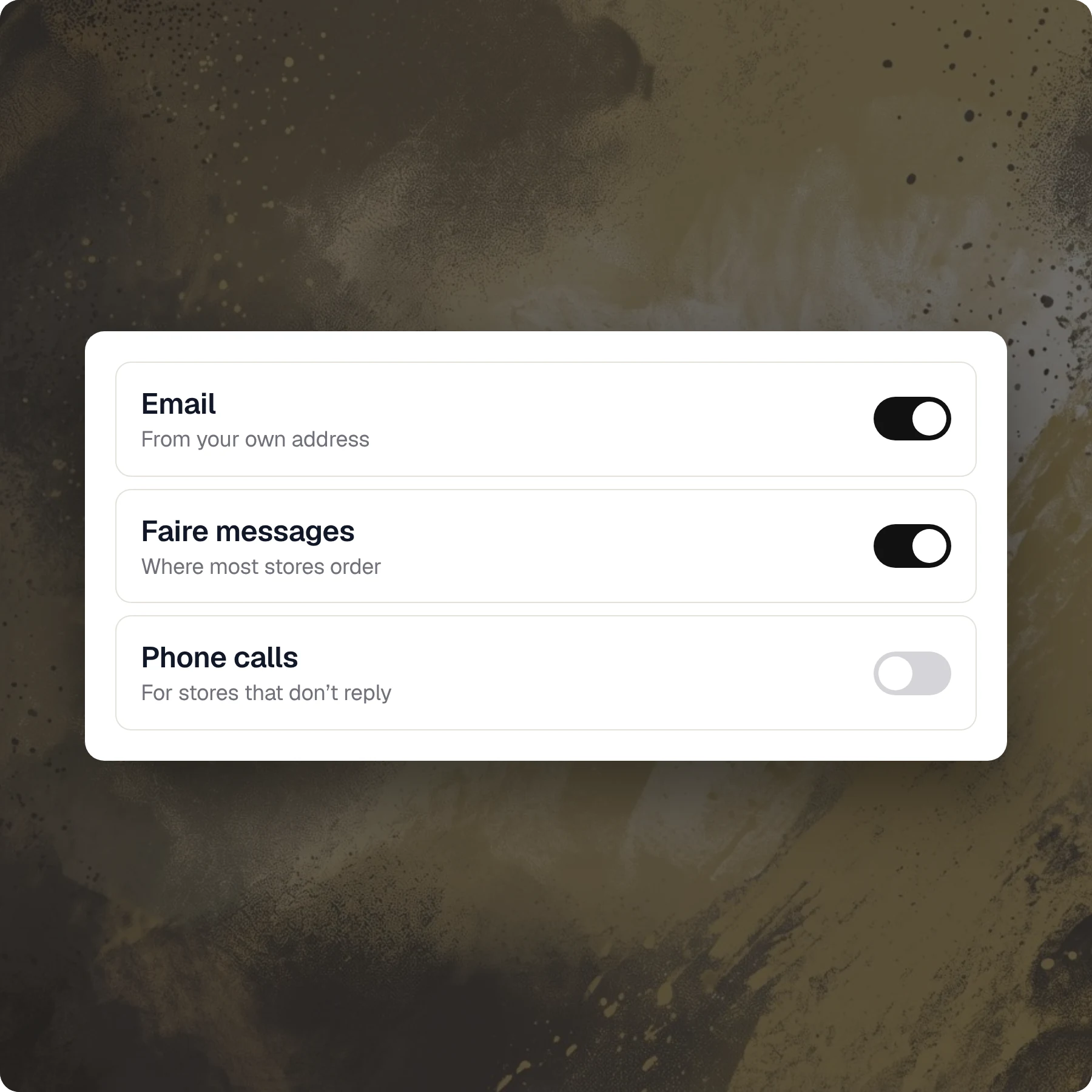
Email outreach
Decide whether email is available to your agent.
Faire messages
Control marketplace messaging separately from other channels.
Phone calls
Choose whether calling is part of the agent’s outreach.
How teams use control and autonomy
Start small, then let routine work run itself. Choose what sends on its own, what waits for you, and what the agent never does.